
Calavera means “skull” in Spanish. During Día de los Muertos, or Day of the Dead, calaveras can represent people who have died and serve as a reminder that death is part of life. The decorated skulls associated with the celebration bring that idea into view through color, craft, and sometimes humor. Smithsonian’s guide to Día de los Muertos
If you’ve wondered why these skulls matter, start with the people being remembered. A skull on an altar belongs to a larger act of remembrance, shaped by the family or community that placed it there.
What does calavera mean
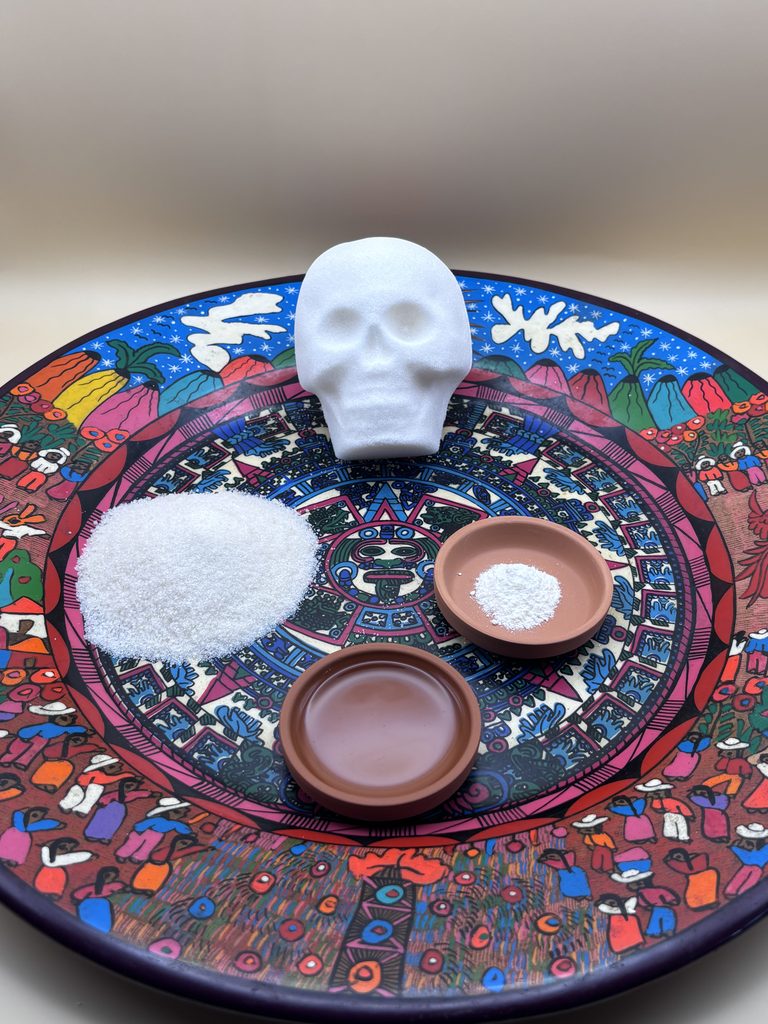
The word itself is straightforward: one skull is a calavera; more than one are calaveras. A calavera de azúcar is a sugar skull.
The distinction matters when you’re looking at art. “Sugar skull” describes a skull made from sugar, while a decorative piece in another material may be inspired by sugar-skull imagery. A skull-shaped artwork doesn’t have to be edible to carry an association with Día de los Muertos.
You may also come across the phrase calaveras literarias. These are poems, which we’ll get to below. Context helps you understand whether someone is talking about a physical skull, an artistic representation, or a piece of writing.
Why skulls are part of Day of the Dead
Día de los Muertos centers on remembering deceased loved ones. In its account of Mexico’s Indigenous observances, UNESCO describes a time when families welcome the temporary return of the dead through offerings and preparations at homes and graves. These observances take place around the end of October and beginning of November. UNESCO’s account of the celebration
A calavera gives death a recognizable form. Its decoration can also make room for affection and playfulness. The Smithsonian connects the brightly decorated skull with the cycle of life, helping explain why these images can feel lively even while acknowledging mortality. Smithsonian’s guide to Día de los Muertos
That combination leaves room for complicated feelings. You can miss someone deeply and still smile at a memory of them. The person’s life remains part of the conversation.
The tradition’s history also deserves care. UNESCO describes the meeting of pre-Hispanic religious practices and Catholic observances. It’s more accurate to recognize those intertwined influences than to describe every modern custom as an unchanged practice from ancient Mexico. UNESCO’s account of the celebration

Sugar skull meaning and the sweetness of life
Sugar skulls make the symbolism especially tangible. Their shape acknowledges death, while their sweetness can evoke the pleasures of being alive.
In Smithsonian Magazine’s reporting on ofrendas in Jalisco, an artisan representative explains that skulls stand for the deceased receiving the offerings, and sugar expresses life’s sweetness. That’s a useful way to understand sugar skull meaning while keeping the explanation connected to a particular community’s practice. Smithsonian Magazine on altar objects
You’ll often encounter alfeñique when reading about these sweets. It refers to a sugar-confection tradition associated with shaped figures, including skulls. Mexico’s Ministry of Culture describes alfeñique as an evolving craft with a history spanning centuries and multiple cultural influences. Museo Mural Diego Rivera’s alfeñique exhibition
If you’re looking at a decorative calavera, check the maker’s description. The visual connection to sugar skulls tells you something about the design, but you’ll need the product details to know what the piece is made from.
What a calavera means on an ofrenda
An ofrenda is an offering, and the word is also commonly used for the altar or arrangement prepared to honor the dead. A calavera takes on meaning alongside the other things placed there.
Photographs identify loved ones. Favorite foods and drinks recall their tastes. Candles and flowers are part of the welcome in many observances. Smithsonian’s reporting shows how those objects work together in altars created by families and artisans in Jalisco. Smithsonian Magazine on altar objects
It helps to look beyond the individual object. Who is being remembered? What did they enjoy? Which details would the people who knew them recognize?
Those questions bring the focus back to a life. A beautifully arranged altar can invite attention, but knowing the stories behind its objects makes the remembrance personal.
Color and decoration need context
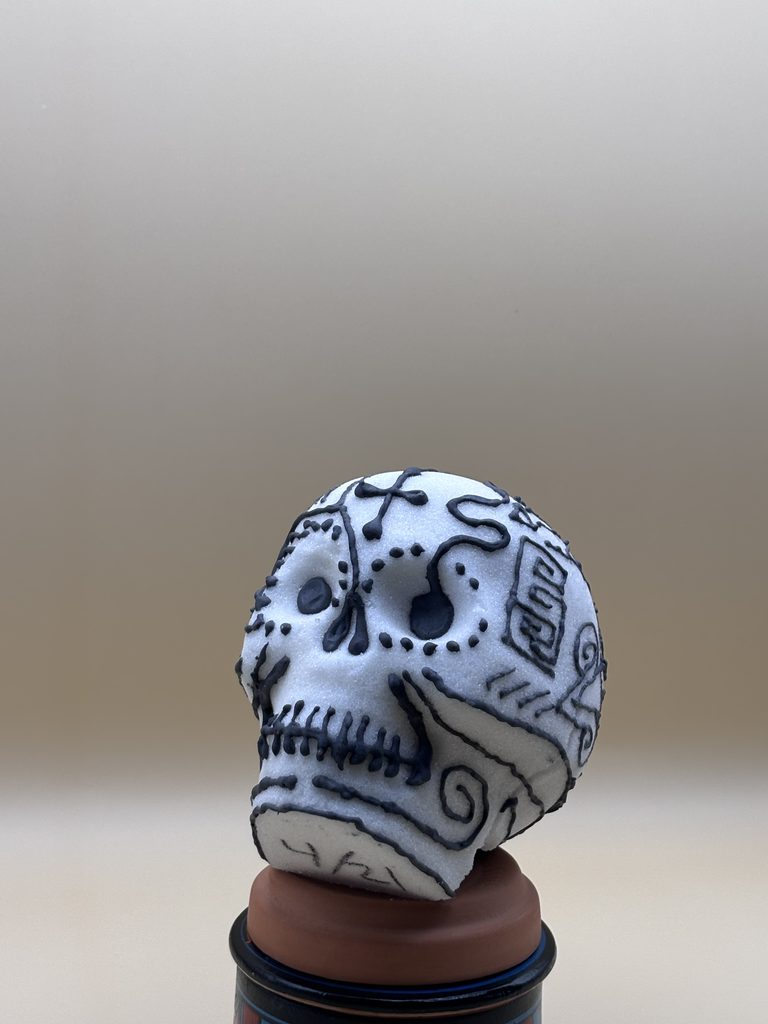
A bright calavera can catch your eye immediately. Understanding its design takes a little more attention.
When an artist or family explains the meaning of a color, flower, or pattern, let that explanation guide you. Be careful with charts that assign a fixed meaning to every color across all calaveras. A chart can’t tell you why a particular maker chose a particular detail.
Ask about the piece itself. Was a color chosen for the composition? Does a detail refer to someone being remembered? Is there a story attached to the design? These are useful questions to bring to the person who made or arranged it.
Calaveras can be written too
Calaveras literarias bring humor into writing about death. These short, playful or satirical poems imagine encounters with death and may address people who are still living.
Mexico’s education ministry includes writing calaveras in its teaching materials, encouraging students to use rhyme and humor. Its examples show how an imagined visit from death can turn an everyday situation into a comic story. Mexico’s education ministry on literary calaveras
That use of the word helps explain why calavera imagery can hold humor as well as remembrance. The subject is serious, and the expression can still be playful.
Remember the people behind the tradition
Families and communities observe Día de los Muertos in different ways. In the Smithsonian American Art Museum’s account, artist Carmen Lomas Garza recalls childhood cemetery gatherings in South Texas with flowers and candles, without the skull imagery many people now expect. Her experience is a useful reminder to leave room for different traditions. Smithsonian American Art Museum on changing observances
If you’re learning about calaveras, listening is a good place to start. Read the artist’s explanation. Learn whose memory an ofrenda honors. Give people space to describe what the celebration means in their own family.
At Los Calaveros, we make our pieces by hand in El Paso, Texas. Our message is simple: Cherish the living. Remember the dead.
You can carry that thought into an ordinary day. Share a story about someone you miss. Ask a relative about a photograph. Make time for someone who’s still here. Understanding the skull’s symbolism gives you a starting point; the memories are yours to keep sharing.